- All
- Product Name
- Product Keyword
- Product Model
- Product Summary
- Product Description
- Multi Field Search

Views: 0 Author: Site Editor Publish Time: 2026-06-20 Origin: Site
Packaging material selection is rarely just an aesthetic choice. It directly dictates dimensional weight shipping costs, overall product damage rates, and supply chain efficiency. Misaligning your product requirements with your packaging capabilities causes severe operational problems. You might face costly over-engineering, which wastes your valuable profit margin on unnecessary durability. Conversely, you might encounter catastrophic under-engineering. This specific mistake leads to high return rates due to transit damage, frustrating customers and destroying profitability.
We designed this guide to provide a clear, technical framework. It helps you evaluate your packaging options objectively. You can determine if a Folding Carton is right for your brand. Alternatively, you might discover you need a sturdy Corrugated Packaging Box. We will help you match the correct specification directly to your product's specific distribution model.
Structural Core: A folding carton consists of a single layer of paperboard (ideal for high-resolution graphics and primary retail packaging), whereas corrugated boxes utilize a fluted medium between linerboards (essential for impact resistance and transit).
Cost vs. Performance: Corrugated materials carry higher base unit costs and require more warehouse storage space, but mitigate the financial risk of transit damage for heavy or fragile items.
Distribution Reality: Direct-to-Consumer (DTC) e-commerce usually requires corrugated outer shippers, while brick-and-mortar retail relies heavily on the space-efficiency and printability of folding cartons.
Procurement Strategy: Tooling costs, Minimum Order Quantities (MOQs), and assembly labor must be factored into the overall operational expenses for both options.
We must first define exact material compositions. This dispels the generic and often confusing "cardboard" terminology. Consumers use "cardboard" loosely to describe almost any paper-based box. Industry professionals require precise specifications. Packaging engineers categorize solutions based on structural layers and load-bearing capabilities.
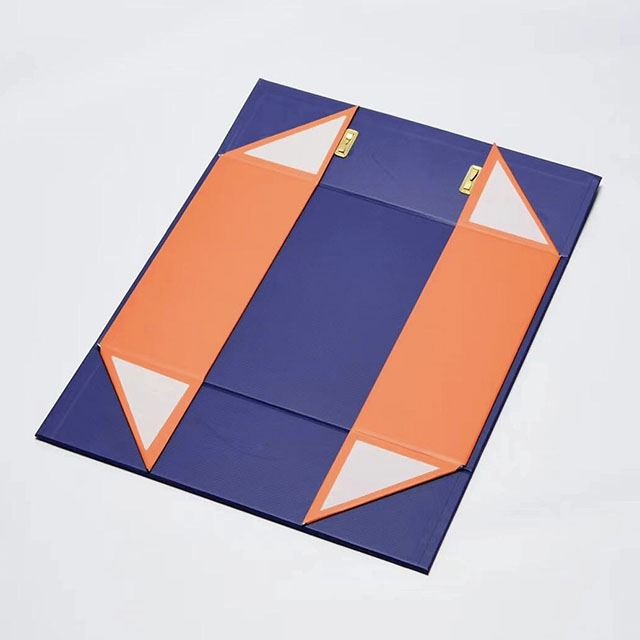
Let us examine the folding carton. Manufacturers construct it from single-ply paperboard, utilizing common grades like SBS, CUK, or standard Kraft. SBS (Solid Bleached Sulfate) is a premium grade offering brilliant white surfaces inside and out. CUK (Coated Unbleached Kraft) provides immense tear resistance while maintaining a natural brown interior. Engineers measure this paperboard material in point thickness. You will typically see ranges from 14pt up to 32pt. A higher point value indicates a thicker, more rigid board. We design them to fold entirely flat. This allows highly efficient warehouse storage. Brands primarily use them as consumer-facing primary packaging. They sit directly on retail shelves holding the product snugly.
Now consider the corrugated box. Its construction is fundamentally different. It features a fluted corrugated medium. Manufacturers sandwich this wavy paper layer securely between inner and outer linerboards. This creates a highly durable composite material. We categorize corrugated board by flute profile. You will see industry designations like A, B, C, E, and F flutes. A-flute is very thick, while F-flute is incredibly thin. We also classify them by wall thickness. Single-wall handles most standard shipments. Double-wall provides extreme protection for heavy industrial items. Engineers design these structures for maximum structural rigidity. They offer excellent vertical compression strength and provide superior impact absorption during transit.
Feature | Folding Carton | Corrugated Box |
|---|---|---|
Material Core | Single-ply paperboard | Fluted medium between liners |
Thickness Metric | Points (e.g., 18pt, 24pt) | Flute Profile (e.g., B-flute, E-flute) |
Primary Function | Retail display, primary containment | Transit protection, secondary shipping |
Storage Profile | Extremely dense when flat | Requires significant pallet space |
Matching material capabilities to your desired business outcomes is critical. You must evaluate multiple dimensions to make an informed choice.
Corrugated materials excel in this specific area. They carry high Edge Crush Test (ECT) ratings and utilize Mullen Burst Test ratings. ECT measures the board's ability to resist crushing under vertical weight. This matters immensely when pallets sit stacked three levels high in a distribution center. Mullen measures the pressure required to rupture the wall entirely. This protects against sharp impacts during rough handling. You absolutely require these ratings for palletized freight. They are also essential for harsh parcel delivery networks. A standard Corrugated Packaging Box easily survives drops and conveyer belt impacts.
Conversely, a standard folding carton offers minimal crush resistance. It cannot survive the rough handling of modern parcel carriers alone. It relies heavily on secondary outer packaging if shipped via parcel networks.
You will find superior surface smoothness on a Folding Carton. This smooth canvas allows for premium Lithographic printing. You can easily apply foil stamping or intricate embossing. You achieve high-fidelity brand colors without any distortion. The ink lays flat and vibrant.
Corrugated materials typically utilize Flexographic printing. The fluted texture beneath the linerboard can cause minor print variations. High-graphic corrugated options do exist. We call this litho-lamination. However, litho-lamination significantly increases your per-unit cost. It involves printing a high-quality top sheet first, then gluing it to the corrugated board afterward.
Both options are highly recyclable, though their percentage of Post-Consumer Waste (PCW) varies significantly. Kraft corrugated often features much higher recycled content. It serves as a rugged material where visual impurities do not matter. Premium SBS cartons rely more heavily on virgin pulp. They need virgin fibers for sanitary reasons. The food, medical, and cosmetics industries demand this cleanliness. Virgin pulp also ensures maximum structural integrity for intricate die-cut folds.
Best Practice: Always ask your supplier for the exact PCW percentage. You can print this data on the bottom panel to boost brand perception.
Common Mistake: Do not expect intricate foil stamping to look flawless on standard C-flute corrugated. The underlying ridges will disrupt the foil application and look sloppy.
Procurement and product teams need a clear shortlisting logic. We built a conditional matrix to guide your decision confidently. You should review your product metrics against these three scenarios.
Your product is lightweight. It should ideally weigh under one to two pounds.
Your primary distribution channel involves physical retail shelves or boutique displays.
High-end cosmetic finishing acts as your primary success criteria for consumer engagement.
You require a highly efficient warehouse footprint. Cartons ship and store perfectly flat, maximizing space.
Your product is heavy, fragile, exceptionally bulky, or irregularly shaped.
You ship the item directly to the end-user via standard parcel carriers. Carriers like UPS, FedEx, or USPS demand strong outer walls.
Your product requires internal protective inserts, foam blocks, or complex partitions to prevent movement.
Many modern brands utilize a strategic hybrid packaging approach. You use a premium carton as the primary product vessel. It holds the item beautifully and showcases the brand. You then house it inside a standard corrugated shipper. This shipper handles the DTC fulfillment process. The outer layer takes the physical abuse during transit. The inner layer delivers the pristine unboxing experience. This approach perfectly balances aesthetic demands with harsh logistical realities.
Distribution Channel | Product Weight Profile | Recommended Packaging Specification |
|---|---|---|
Retail Store Shelf | Under 2 lbs | Folding Carton |
Direct-to-Consumer | Over 2 lbs | Corrugated Box |
Premium E-Commerce | Variable Weights | Hybrid (Carton inside Corrugated Shipper) |
You must move beyond evaluating the simple unit price. You need to understand your actual operational expenses. Both formats present unique implementation considerations that impact your bottom line.
Custom die-cuts require upfront capital. Print plates also carry initial fees. A folding carton often requires incredibly precise die-cutting tolerances. The gluing processes must be exact. If the supplier misses the required tolerance, your automatic assembly machinery will jam on the packing line. Corrugated dies are also expensive. However, standard RSC (Regular Slotted Carton) corrugated styles often bypass custom die charges entirely because factories run them on standard machines.
Corrugated materials consume significantly more pallet space. Even when shipped completely flat, the internal flutes add volume. This directly increases your inbound freight costs. It also demands much larger warehouse storage requirements. You might fit ten thousand flat cartons on a single pallet. That same pallet footprint might only hold one thousand flat corrugated shippers. You must calculate this storage disparity when planning your inventory.
Evaluate your fulfillment labor carefully. Auto-bottom cartons assemble much faster. The packer simply pushes the corners, and the bottom locks instantly. However, they cost more to manufacture initially. Standard RSC corrugated boxes require taping or gluing equipment on your pack line. A standard RSC requires a tape gun. The packer must fold the bottom flaps, tape the seam, insert the product, fold the top flaps, and apply another strip of tape. These extra seconds multiply across thousands of orders. This inflates your fulfillment labor budget significantly over time.
Best Practice: Always test the assembly speed yourself. Use a stopwatch. Ten seconds saved per unit yields massive operational savings over a year.
Common Mistake: Buyers often forget to account for inbound freight. A cheaper unit price overseas might vanish entirely once you pay to ship bulky corrugated flat bundles across the ocean.
Avoid specifying packaging based purely on aesthetic preference. Audit your product's weight carefully. Map out the intended transit method step-by-step. Calculate your profit margins to ensure the packaging cost aligns with your business model. The wrong choice damages your brand reputation and drains your finances.
Identify your primary distribution channel before designing the structural artwork.
Measure your warehouse space. Ensure you can physically store the required MOQs comfortably.
Calculate labor costs for assembly, rather than just looking at the unit cost of the blank board.
We strongly recommend a specific next-step action. Request structural blanks from your packaging partner. Ask for a heavyweight carton and an E-flute corrugated alternative. Conduct physical drop tests in your facility. Perform your own pack-out time trials. You must complete these physical evaluations before committing to any large production run.
A: No. "Cardboard" is an ambiguous consumer term. It lacks technical meaning. In manufacturing, you specify either paperboard for cartons or corrugated board for shipping boxes. Using exact terms prevents costly production errors.
A: Generally, no. Unless the product is highly durable, like apparel, it will fail. The carton must also be exceptionally thick. Otherwise, it will likely suffer cosmetic or structural failure in standard parcel networks.
A: E-flute is a very thin corrugated material. It bridges the gap between the two options. It offers the structural rigidity of corrugated board. It also provides a smoother surface for better printing. Brands often use it for subscription boxes or heavier retail items.